
After understanding Docker and containers, the next step is learning about Kubernetes—the powerful tool that helps manage them.
A Kubernetes cluster is a group of nodes (machines) that work together to run containerized applications. Unlike Docker, which focuses on creating and running containers, Kubernetes takes it further by orchestrating them—scaling applications up or down automatically based on demand.
Kubernetes was originally developed by Google and has become the most widely adopted container orchestration platform in the industry. It ensures that applications are always running smoothly, even when workloads increase unexpectedly.
Table of Contents
How Does Kubernetes Work?
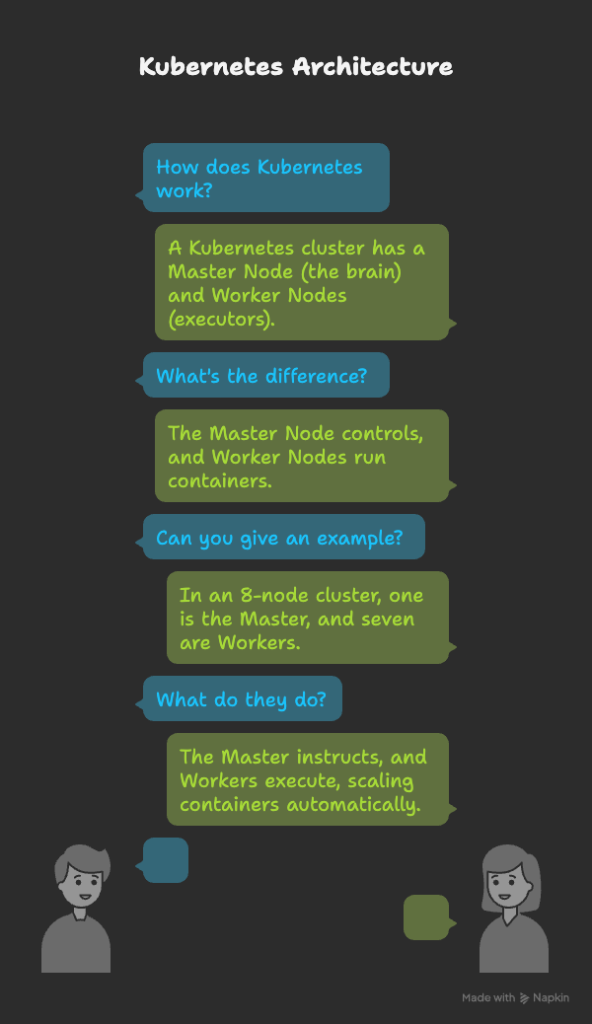
A Kubernetes cluster is made up of two key components:
- Master Node – Acts as the “brain” of the cluster, controlling and managing everything.
- Worker Nodes – Execute the actual workloads by running containers.
For example, in an 8-node cluster, one node will act as the master while the remaining seven serve as worker nodes. The master node gives instructions, and the worker nodes carry them out, ensuring containers scale up or down automatically.
This setup provides flexibility, resilience, and automation—all without manual intervention.
What Can You Do with Kubernetes?
Kubernetes is more than just a container manager. Here’s what makes it so powerful:
- ✅ Orchestrate containers across multiple nodes – Keep applications running consistently.
- ✅ Optimize resources – Ensure efficient use of CPU, memory, and networking.
- ✅ Automate scaling and updates – Applications grow and update seamlessly.
- ✅ Scale containerized apps on demand – Perfect for enterprises with fluctuating workloads.
- ✅ Self-healing capabilities – Kubernetes can restart failed containers automatically.
FAQs About Kubernetes Clusters
Kubernetes is designed to manage, scale, and automate containerized applications efficiently.
Docker creates and runs containers, while Kubernetes orchestrates and manages them across multiple machines.
Yes, Kubernetes can run with other container runtimes like containerd or CRI-O, though Docker was its original pairing.
Yes, but it’s most beneficial for medium to large-scale applications where scaling and automation are critical.
Major tech companies, cloud providers, and enterprises worldwide use Kubernetes to manage their infrastructure.
Absolutely! With self-healing and automated scaling, Kubernetes ensures applications stay available with minimal downtime.
Conclusion
Kubernetes is the go-to platform for container orchestration, allowing businesses to scale applications automatically, optimize resources, and ensure smooth performance. Whether you’re running a small app or managing enterprise-level infrastructure, Kubernetes provides the automation, resilience, and flexibility you need.