
In modern IT infrastructure, storage plays a critical role. One of the most common ways servers connect to storage arrays is through iSCSI (Internet Small Computer System Interface). To make this possible, we use something called an iSCSI initiator.
In this article, we’ll explain what an iSCSI initiator is, its types, and why it is so important in storage networking.
Table of Contents
What is an iSCSI Initiator?
An iSCSI initiator is either software or hardware that allows a host computer (server) to communicate with an iSCSI storage array (also called an iSCSI target).
- It sends I/O (input/output) commands over TCP/IP through an Ethernet network.
- The initiator starts (or “initiates”) the communication with the storage system, making data transfers possible.
In simple terms, the initiator is like the driver that lets your server talk to iSCSI storage.
Types of iSCSI Initiators
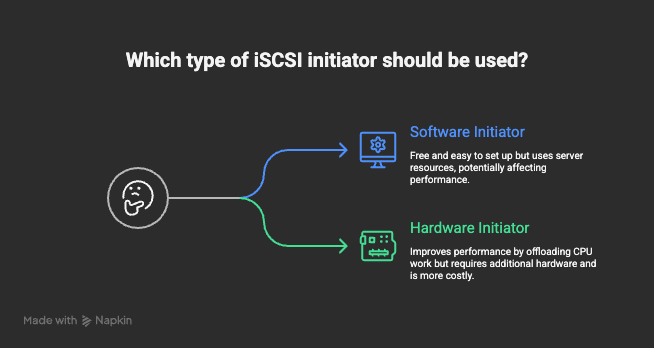
Software iSCSI Initiator
- Comes built into most modern operating systems (Windows, Linux, etc.).
- Handles I/O commands using the host system’s CPU and memory.
- Advantage: Free and easy to set up.
- Downside: Uses server resources, which may affect performance under heavy workloads.
Hardware iSCSI Initiator
- Implemented using a dedicated network interface card (NIC) in the server.
- Handles I/O processing, TCP/IP offload, and encryption at the hardware level.
- Advantage: Offloads the work from the host CPU, improving performance.
- Downside: Requires extra hardware, making it more costly than software initiators.
Why Use an iSCSI Initiator?
- Enables communication between servers and iSCSI storage arrays.
- Helps organizations use Ethernet for storage networking, reducing costs compared to Fibre Channel.
- Improves storage flexibility and scalability in SAN (Storage Area Network) environments.
FAQs About iSCSI Initiators
It initiates I/O commands from the host to an iSCSI target, enabling communication between servers and storage.
Yes, for small to medium workloads, software initiators work fine. Large enterprises often prefer hardware initiators for better performance.
Most modern OS (Windows, Linux, VMware ESXi) come with built-in software iSCSI initiators.
The initiator starts communication (client-side), while the target is the storage system (server-side).
Yes, iSCSI works over standard Ethernet, but performance is better with dedicated storage networks.
Conclusion
An iSCSI initiator is essential for connecting servers to storage arrays over Ethernet.
- Software initiators are free and simple but consume CPU resources.
- Hardware initiators offload processing for better performance but require additional cost.
👉 In short: if you’re running a small setup, a software initiator is usually enough. For large enterprise systems, hardware initiators provide the performance boost needed.